FDA Vape Enforcement Plan 2026: What Manufacturers, Distributors and Retailers Must Know
FDA’s 2026 vape enforcement roadmap signals tighter PMTA deadlines, stronger disposable monitoring and expanding flavor-rule coordination across the U.S. market.
Manufacturers, distributors and retailers should prepare now as compliance infrastructure becomes the industry’s next competitive advantage.
The FDA’s 2026 vape enforcement plan introduces tighter PMTA deadline monitoring, stronger action against unauthorized disposable devices, expanded flavor-restriction surveillance and upgraded retailer age-verification expectations. The roadmap signals a major shift in how manufacturers, distributors and retailers must manage compliance risk in the U.S. adult-use nicotine device market.
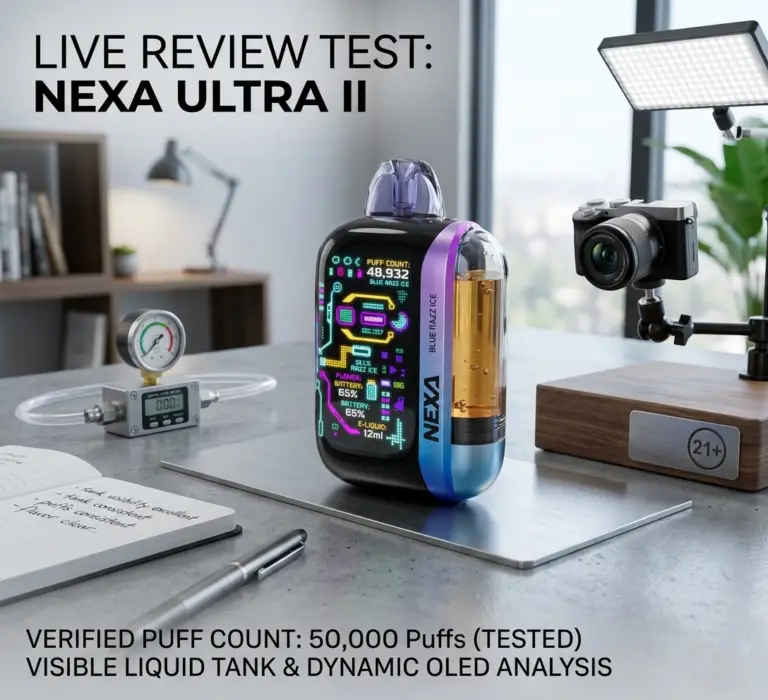
Nexa Ultra II 50K Review (2026): Visible Tank + OLED 50K Disposable Tested
As enforcement coordination increases between federal and state agencies, stakeholders across the nicotine-device supply chain are reassessing inventory exposure, product authorization pathways and point-of-sale compliance infrastructure ahead of June 30, 2026.
The FDA’s Updated Enforcement Blueprint — Core Elements
The agency’s latest enforcement signals focus on four priority areas shaping the next phase of regulatory oversight.
| FDA Enforcement Focus | Market Impact | Keyword Cluster |
|---|---|---|
| Monitoring unauthorized disposable devices | Faster inspections and potential removal notices | disposable vape crackdown 2026 |
| PMTA deadline enforcement | Civil penalties possible after June 30 2026 | PMTA deadline 2026 |
| Flavor-restriction coordination | Expanded state-federal monitoring alignment | vape flavor bans 2026 |
| Retail age-verification upgrades | Real-time ID validation expectations increasing | vape age verification compliance |
These signals indicate that enforcement activity is shifting from reactive warning letters toward proactive compliance-tracking infrastructure across the supply chain.
compliance-focused retail environments
Timeline: How FDA Enforcement Is Accelerating Toward 2026
Understanding the enforcement timeline helps distributors and retailers anticipate compliance pressure points.
2024 — Warning-letter activity increases across disposable imports
2025 — State-federal coordination expands enforcement visibility
2026 — PMTA deadline pressure intensifies across device categories
2027 — Possible national flavor-framework alignment expected
This progression reflects a gradual transition toward standardized national compliance expectations.
screen-equipped disposable platforms entering the 50K puff category
Senate Response: Why Policymakers Are Increasing Pressure
Several senators, including Sen. Dick Durbin and Sen. Bill Cassidy, have raised concerns about the pace and clarity of enforcement rollout, highlighting both public-health urgency and the need for clearer compliance guidance for small retailers and regional distributors.
The discussion reflects a broader policy trend:
faster enforcement timelines combined with stronger expectations for operational compliance readiness across the nicotine-device supply chain.
For industry stakeholders, the key takeaway is not political positioning — but regulatory acceleration.
smart-display disposable hardware trend
Market Implications Across the Supply Chain
Manufacturers: PMTA Readiness Becomes a Competitive Requirement
Manufacturers preparing complete toxicology disclosures, ingredient transparency documentation and manufacturing-process verification will be better positioned as enforcement timelines tighten.
Devices without viable authorization pathways may face shortened commercial lifecycles in the U.S. market.
Distributors: Inventory Exposure Requires Active Review
Regional distributors’ compliance-focused inventory partners may need to re-evaluate SKU exposure and prioritize PMTA-pathway-aligned product categories as enforcement coordination expands.
Inventory strategy is increasingly becoming a regulatory decision rather than purely a demand-driven decision.
Retailers: Age-Verification Infrastructure Is Becoming Central
Retail compliance expectations are shifting toward:
real-time ID scanning
POS compliance integration
automated product-authorization tracking
Retailers demonstrating structured compliance workflows typically reduce enforcement-risk exposure during inspections.
Technology Trends Emerging From the 2026 Enforcement Strategy
Regulatory alignment is accelerating adoption of compliance-supporting technologies across the vape ecosystem.
Key developments include:
QR-linked traceability systems connecting packaging to compliance databases
AI-assisted ID verification tools supporting online-order validation
smart packaging identifiers improving audit transparency
SKU-level authorization visibility tools integrated into retail POS systems
These technologies are expected to become standard compliance infrastructure over the next regulatory cycle.
Regulatory Outlook: What Comes After the 2026 Enforcement Phase
Several forward-looking signals are already emerging from agency communications and enforcement coordination trends.
Expected developments include:
possible national flavor-framework alignment by 2027
predictable quarterly PMTA review cycles
expanded coordination between FDA, CDC and regulatory science organizations such as CORESTA
Together, these signals suggest the market is moving toward a more structured authorization environment rather than temporary enforcement volatility.
FAQ: FDA Vape Enforcement Plan 2026
What is the FDA’s 2026 vape enforcement plan?
It is a regulatory roadmap emphasizing tighter PMTA deadline enforcement, stronger monitoring of unauthorized disposable devices, expanded flavor-restriction coordination and upgraded age-verification expectations.
When is the PMTA deadline enforcement milestone?
June 30, 2026 represents a key compliance checkpoint for manufacturers managing authorization pathways.
How will disposable vape products be affected?
Unauthorized disposable devices may face faster inspection cycles and potential removal notices depending on authorization status.
Will retailers need stronger age-verification systems?
Yes. Enforcement coordination suggests increasing expectations for real-time ID verification and integrated compliance-tracking workflows.
Are distributors affected directly by enforcement activity?
Yes. Distributors increasingly play a role in inventory-level compliance alignment across the supply chain.
Quick Industry Checklist for 2026 Enforcement Readiness
Manufacturers
Complete PMTA documentation
expand ingredient transparency
prepare traceability infrastructure
Distributors
audit SKU authorization exposure
prioritize compliance-aligned inventory
update retailer compliance communication workflows
Retailers
deploy structured ID-verification tools
align POS compliance visibility
prepare inspection-ready inventory tracking systems
Why This Enforcement Roadmap Matters for the U.S. Vape Market
The FDA’s 2026 enforcement strategy represents a structural shift in how authorization readiness, flavor-category monitoring and age-verification expectations interact across the nicotine-device ecosystem.
Manufacturers that accelerate PMTA readiness may preserve product continuity.
Distributors that adapt inventory strategy early may reduce regulatory exposure.
Retailers that strengthen compliance workflows now are better positioned for future inspection environments.
The next regulatory phase is less about sudden enforcement actions — and more about predictable compliance infrastructure across the adult-use nicotine-device market.
Sources
FDA Tobacco Products Guidance Center
https://www.fda.gov/tobacco-products
CDC Office on Smoking and Health
https://www.cdc.gov/tobacco
CORESTA Regulatory Science Resources
https://www.coresta.org
Read more
Which States Allow Flavored Vapes in 2026? Full Legal Guide
FDA‑Authorized Vape Products in 2026: What Retailers and Consumers Need to Know
VapeTrends360 Weekly Brief
Stay Ahead of the Industry
Get the news before it becomes a problem.
- FDA enforcement updates
- New product launches
- Market trends
- Retailer insights
Join industry professionals who want the news before it becomes a problem. Free. Unsubscribe anytime.
Continue Reading