1/21/2026
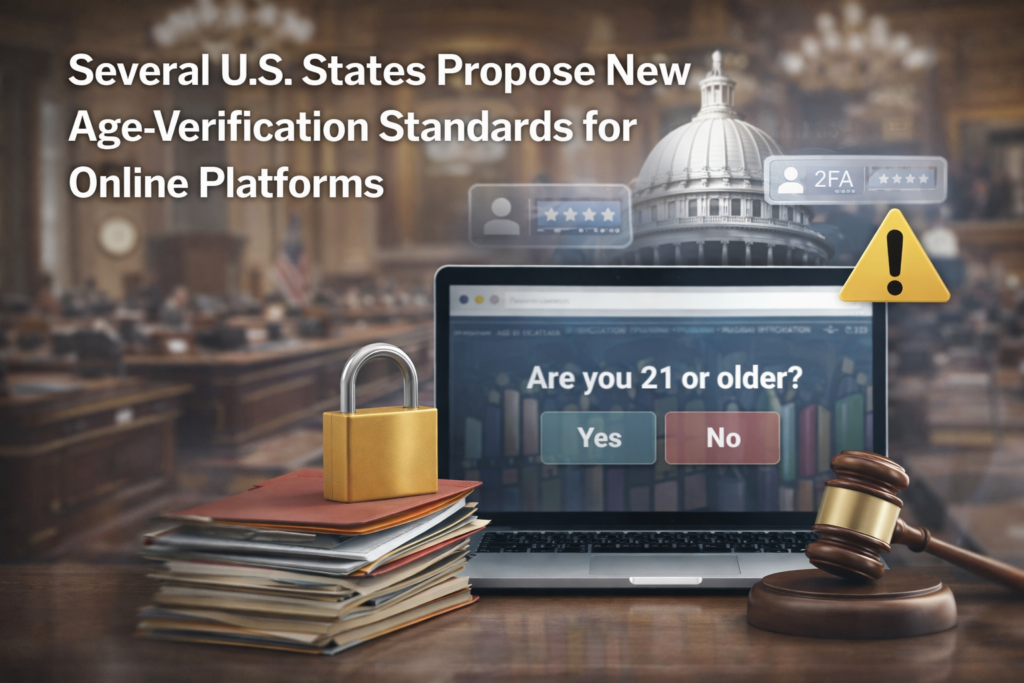
Several U.S. state legislatures are reviewing proposed updates to age-verification requirements for online platforms that reference or discuss vaping-related products, according to recent legislative filings and committee schedules. The initiatives reflect a broader policy effort to reduce youth exposure to age-restricted topics in digital environments.
Lawmakers in multiple states have introduced bills that would expand or clarify obligations for websites, blogs, and online media outlets that publish content related to vaping or other nicotine products. While the proposals vary by jurisdiction, many emphasize clearer audience designation, access controls, and enhanced age-affirmation mechanisms for adult-oriented material.
Supporters of the measures argue that commonly used self-attestation tools—such as basic age-confirmation pop-ups—may not provide sufficient safeguards against underage access. Some proposals call for stronger verification standards or additional compliance documentation for platforms that routinely publish content addressing regulated products.
At the same time, industry groups and digital publishers have raised questions about the scope of the proposed rules. In particular, stakeholders are seeking clarity on how the requirements would apply to informational or non-commercial websites that do not sell products directly. Legal analysts note that several bills attempt to distinguish between promotional activity and journalistic or educational content, though enforcement interpretations could differ over time.
The proposals follow earlier regulatory efforts targeting social media platforms, video-sharing services, and e-commerce websites. Policymakers have increasingly focused on digital exposure pathways, citing concerns that retail-level enforcement alone has not fully addressed youth access issues.
Most of the measures remain under committee review, with public hearings expected in the coming months. Observers anticipate that outcomes will vary by state, potentially resulting in differing compliance expectations for online publishers operating across multiple jurisdictions.
As discussions continue, industry participants and publishers are closely monitoring how terms such as “covered platforms” and “vaping-related content” are ultimately defined, as these distinctions may have significant implications for compliance planning nationwide.
Which States Are Advancing Age-Verification Bills in 2026?
As of early 2026, at least 14 states have introduced or advanced legislation requiring online platforms — including vape retailers, third-party marketplaces, and delivery services — to implement stricter age-gating at checkout. The states leading the push include Texas, Florida, Georgia, Ohio, and North Carolina, all of which have active bills under committee review.
While the PACT Act already requires age verification for online nicotine product sales, the new state-level proposals go further by mandating government-issued ID verification rather than simple self-declaration. Several bills also require retailers to retain verification records for at least two years and submit annual compliance reports to state health departments.
What Stricter Online Age Verification Means for Vape Retailers
For online vape retailers, the compliance burden would increase significantly. Currently, most platforms rely on date-of-birth entry at checkout plus a signed adult attestation on delivery. The proposed standards would require integration with third-party identity verification services such as AgeID, Yoti, or similar platforms — adding per-transaction costs estimated between $0.25 and $1.50 per order.
Smaller direct-to-consumer vape brands with thin margins may find this cost prohibitive, potentially accelerating the consolidation of online vape sales to larger platforms and wholesale-focused distributors. Industry groups including the Vapor Technology Association (VTA) have submitted public comment opposing the most burdensome proposals while expressing support for PACT Act compliance improvements.
The Federal Angle: Where the FTC and FDA Stand
At the federal level, both the FTC and FDA have signaled interest in tightening online sales enforcement. The FDA’s 2025 enforcement priorities explicitly flagged online platforms as a key channel for unauthorized disposable vape products, and the agency has issued warning letters to multiple e-commerce operators for failing to verify purchaser age at the point of sale.
The FTC has been scrutinizing platform liability under Section 5 of the FTC Act for platforms that knowingly facilitate sales of nicotine products to minors. Industry legal analysts expect at least one major enforcement action targeting an online vape retailer in 2026 that could set precedent for platform-level responsibility.
What Retailers Should Do Now
- Audit your current age-verification method — simple date-of-birth entry likely does not meet proposed 2026 standards.
- Evaluate third-party age verification providers early to understand integration requirements and per-transaction costs.
- Review your delivery verification process — adult signature at delivery is required under PACT Act for most nicotine products.
- Track state legislation in your key markets — laws in large states like Texas and Florida will likely trigger federal follow-on action.
- Consult legal counsel on record retention — proposed bills require multi-year retention of verification data, with privacy law implications in states with comprehensive consumer privacy acts.
The direction of travel is clear: online vape sales will face meaningfully tighter age verification requirements by end of 2026, whether through state legislation, FTC enforcement, or FDA guidance updates. Retailers who implement compliant systems now will avoid both fines and the operational disruption of last-minute platform changes.
VapeTrends360 Weekly Brief
Stay Ahead of the Industry
Get the news before it becomes a problem.
- FDA enforcement updates
- New product launches
- Market trends
- Retailer insights
Join industry professionals who want the news before it becomes a problem. Free. Unsubscribe anytime.