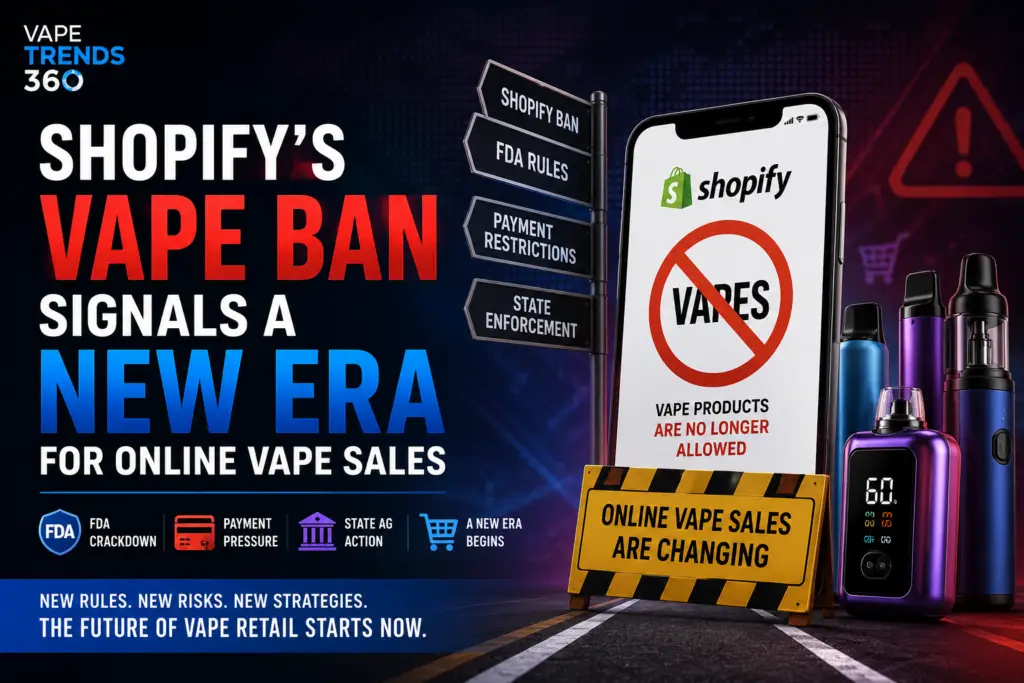
Shopify’s Vape Ban Signals a New Era for Online Vape Sales
📋 In This Article
What Shopify Is Changing — and Why It Matters
Shopify provides the underlying infrastructure that enables millions of merchants to operate e-commerce stores. Its platform has, until now, hosted a significant slice of online vape sales — including, according to Reuters’ sources, a large volume of unlicensed products manufactured primarily in China.
According to two sources familiar with the company’s plans cited by Reuters, Shopify will ban all vapes from its platform — not just illegal ones. In the U.S., the ban covers both legally authorized and unauthorized vape products. The geographic scope beyond the United States remains unclear.
We adjust our enforcement approach when legal changes call for it.
— Shopify spokesperson, via Reuters (June 23, 2026)
For merchants who have built their entire vape businesses on Shopify’s infrastructure, this is an existential disruption. The ban is expected to have a “chilling effect” on sellers — and could force thousands of online vape retailers to rapidly seek alternative platforms or pivot their business models.
Why State Attorneys General Are Driving This
Shopify didn’t arrive at this decision in a vacuum. The platform has been in active negotiations since late 2025 with a bipartisan coalition of 25 state attorneys general, who sent a formal letter to Shopify in November 2025 urging the company to halt illegal vape sales on its platform.
⚖️ The AG Strategy
Rather than chasing individual sellers, state law enforcement officials are targeting the industry’s infrastructure — platforms, payment processors, and logistics providers. By cutting off oxygen at multiple points in the supply chain, they are making the illegal vape trade structurally unviable.
The concern driving them is serious: unlicensed vapes, predominantly manufactured in China, are flooding the U.S. market — online and in brick-and-mortar stores — despite being illegal to import or sell without FDA marketing authorization. These products bypass safety testing, age verification requirements, and labeling standards.
The expected Shopify ban, Reuters reported, represents “the most significant win yet” for this coalition. But industry observers expect the AGs to continue targeting other major e-commerce platforms that host vape merchants.
FDA’s New Rule Targeting Foreign Vape Manufacturers
Simultaneously, the FDA has been tightening its regulatory grip on the upstream source of the problem: foreign manufacturers — particularly Chinese ones — who produce the vast majority of unlicensed vapes entering the U.S. market.
🏛️ FDA Fast Facts
- Only 45 e-cigarette products have received FDA marketing authorization — mostly tobacco-flavored
- Foreign manufacturers face new proposed registration and oversight requirements before products can enter U.S. commerce
- Chinese vape giants like the maker of Elf Bar face significant new compliance burdens and import risks
- The narrow authorized market has inadvertently fueled the illegal market by leaving consumer demand unmet through legal channels
The practical effect: foreign manufacturers that have long operated in a gray zone are now facing increasing legal and logistical barriers to entry. Combined with platform-level bans like Shopify’s, the distribution pathway for unauthorized foreign vapes is being squeezed from both ends.
Why Payment Processors May Be Next
In April 2026, the same coalition of state attorneys general sent letters to major card networks and payment processors — including Mastercard and Visa — urging them to take stronger action against illegal vape sales. The response came swiftly.
💳 Mastercard’s May 2026 Global Notice — Key Points
We have zero tolerance for unlawful activity on our network.
— Mastercard statement, obtained by Reuters (May 2026)
Other major card networks and payment processors — including Visa, PayPal, and Stripe — are likely watching closely. Retailers who rely on standard payment processing for vape sales should not assume today’s arrangements are permanent.
What Online Vape Retailers Should Do Now
If you operate an online vape retail business, the time to act is now — not after your Shopify store goes dark or your payment processor flags your account. Here is what industry experts recommend:
If you are selling products that lack FDA marketing authorization, you are operating in increasingly dangerous legal and commercial territory. Understand exactly which products are authorized and which are not.
Shopify’s move may signal a broader industry shift. Investigate alternative platforms and ensure you are not entirely dependent on a single hosting provider. Platforms built specifically for compliant vape and tobacco commerce may become critical lifelines.
Speak proactively with your payment processor about compliance expectations. If you deal in any gray-market products, understand that Mastercard’s move signals the payment window may narrow significantly.
While the authorized product list is still narrow — currently just 45 products — it is expected to grow. Building relationships with manufacturers pursuing or holding FDA authorization is the single strongest long-term strategy.
The interplay of state AG enforcement actions, federal FDA regulation, and platform-level bans creates a complex compliance landscape. A lawyer with experience in tobacco and nicotine product regulation can help you understand your specific exposure.
What Consumers May Notice: Fewer Sites, Fewer Brands, Higher Prices
For vapers who currently shop online, the changes unfolding in the industry will become increasingly visible over the coming months.
💡 Good News for Legal Vape Users
The Shopify ban’s effect on legal, FDA-authorized vape products should be relatively limited. These products — such as those sold under Juul or BAT brands — are predominantly sold in brick-and-mortar retail, not online. The shockwaves will hit the gray and black market hardest.
The Bottom Line
📚 Sources
Reuters — “Shopify to bar vapes as U.S. authorities crack down on illegal industry” by Emma Rumney (June 23, 2026) | Reuters — “US attorneys general urge Shopify to halt illegal vape sales on its platform” (November 24, 2025). VapeTrends360 covers developments in the vaping industry for retailers, wholesalers, and consumers.
VapeTrends360 Weekly Brief
Stay Ahead of the Industry
Get the news before it becomes a problem.
- FDA enforcement updates
- New product launches
- Market trends
- Retailer insights
Join industry professionals who want the news before it becomes a problem. Free. Unsubscribe anytime.