Quick answer: Nicotine pouches are one of the fastest-growing categories in U.S. retail right now, driven by discreet indoor use, no vapor or device required, and a wave of favorable FDA coverage for brands like ZYN. Retailers are responding by expanding pouch shelf space, often at the expense of disposable vape facings, because pouches typically carry simpler compliance requirements and strong repeat-purchase habits.
Vape retailers spent most of 2025 and early 2026 reacting to flavor bans, payment processor crackdowns, and enforcement sweeps. Nicotine pouches have quietly become the calmer, faster-growing part of the same stores’ business. This piece looks at the category from a retail and business lens — for the consumer-facing “should I switch” angle, see our companion piece on nicotine pouches vs. vapes.
Why Retailers Are Expanding Pouch Shelf Space
Retail buyers point to a few consistent drivers behind the pouch category’s shelf-space growth:
- No vapor, smoke, or exhale — pouches can be used indoors, at work, or in vehicles without violating typical vaping restrictions.
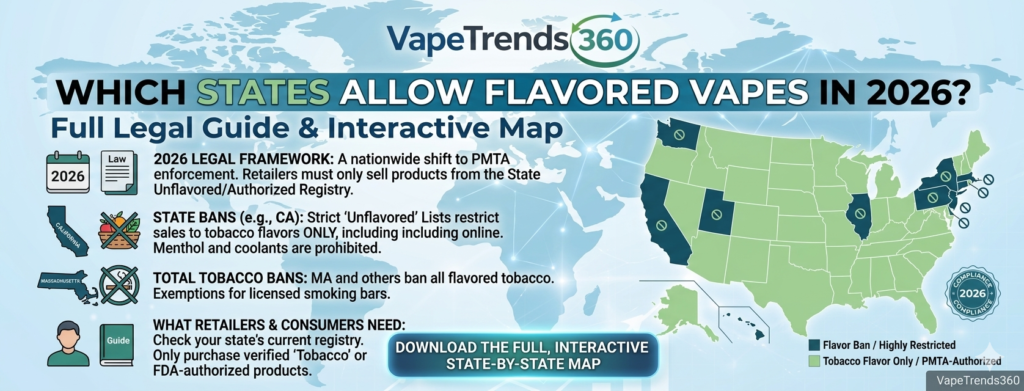
- Simpler compliance footprint — no battery, coil, or device-related regulation exposure, and none of the flavor-ban complexity currently affecting disposables in states like California and Massachusetts.
- Regulatory tailwind — the FDA’s 2026 decision to grant ZYN a “lower risk” designation, covered in our report on FDA Gives ZYN Historic ‘Lower Risk’ Status, gave the category a level of regulatory legitimacy disposables don’t currently have.
- Strong repeat-purchase behavior — pouch users tend to stick with a strength and flavor once they find one that works, supporting predictable reorder cycles for retailers.
VapeTrends360 Weekly Brief
Stay Ahead of the Industry
Get the news before it becomes a problem.
- FDA enforcement updates
- New product launches
- Market trends
- Retailer insights
Join industry professionals who want the news before it becomes a problem. Free. Unsubscribe anytime.
Pouches vs. Disposable Vapes: Retail Characteristics
| Factor | Nicotine Pouches | Disposable Vapes |
|---|---|---|
| Regulatory exposure | Lower — no device/battery rules, limited flavor-ban overlap | Higher — flavor bans, PMTA, import screening |
| Typical unit price | Lower per unit, frequent reorders | Higher per unit, less frequent reorders |
| Use-location flexibility | Indoor-friendly, discreet | Outdoor/designated-area use |
| Shelf space trend (2026) | Expanding | Flat to contracting in restricted states |
Note: this table reflects general category and retail trends reported by industry sources, not audited financial data. Individual retailer results vary by market and assortment.
For retailers assessing assortment: If you’re evaluating pouch SKUs, Zovapo’s nicotine pouch category is a useful reference point for current retail pricing and popular brands like ZYN, ZIMO, and OEO side by side.
For strength-level detail once a customer picks pouches, our guide on 3mg vs. 6mg vs. 9mg vs. 12mg nicotine pouch strengths is a useful staff training reference, and our ZIMO Nicotine Pouches review looks at how independent challengers are positioning against ZYN specifically.
Frequently Asked Questions
Are nicotine pouches replacing vapes at retail?
Not entirely — most retailers are expanding pouch assortment alongside vapes rather than replacing them, though shelf space growth is currently tilted toward pouches in many stores.
Why did the FDA’s ZYN decision matter for retail?
A “lower risk” designation gives retailers and distributors more regulatory confidence in the category compared to disposables, which still face flavor bans and PMTA uncertainty.
Do pouches have better margins than disposable vapes?
Margins vary by brand and distributor agreement, but pouches generally carry lower per-unit price points with higher purchase frequency, which can offset lower per-transaction margin with volume.
Is the pouch category regulated differently than vapes?
Yes — pouches aren’t inhaled or vaporized, so they avoid most device- and vapor-specific regulations that apply to e-cigarettes, though they remain subject to nicotine product rules and age verification requirements.
This article reflects general industry and retail trends and is not financial or investment advice. Retailers should verify current margins and compliance requirements with their own distributors and counsel.