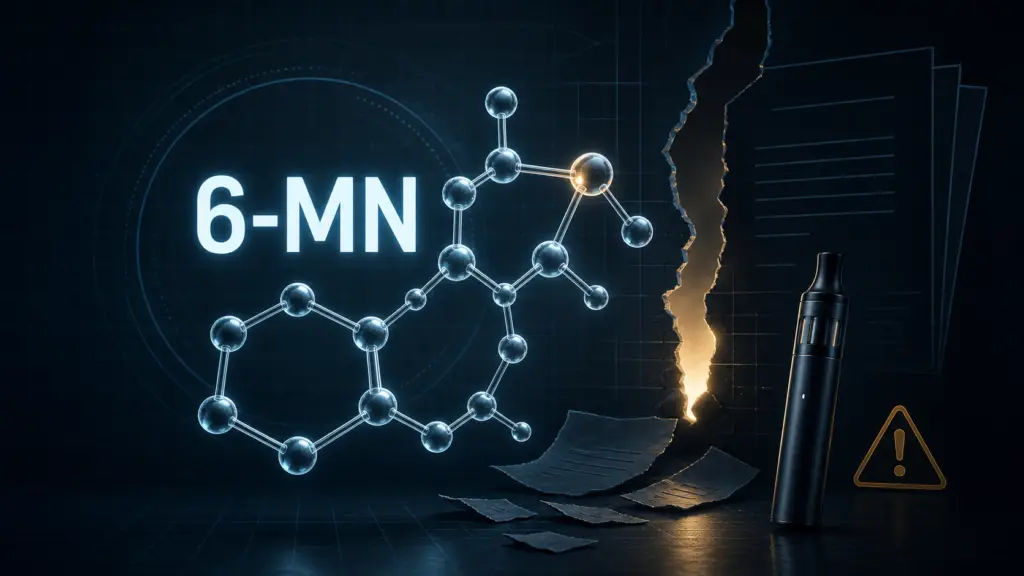
6-methyl nicotine (6-MN), also marketed as “Metatine” or “Nixotine,” is a nicotine analog – a molecule chemically similar to nicotine but not derived from tobacco. Because U.S. tobacco law defines “nicotine” narrowly, some Chinese vape manufacturers are using 6-MN to sell products that function like nicotine vapes while arguing they fall outside FDA’s tobacco-product rules. No ENDS product containing a nicotine analog is currently FDA-authorized, and health researchers say its addiction and safety profile in humans is largely untested.
If you’ve seen a disposable vape marketed as “nicotine-free” or “tobacco-free” that still hits like a regular vape, there’s a good chance it contains a nicotine analog – most commonly 6-methyl nicotine. Here’s what it is, why it exists, and what regulators are doing about it.
What Is 6-Methyl Nicotine?
6-methyl nicotine is a synthetic compound structurally related to nicotine – close enough that it’s believed to bind to the same nicotinic receptors in the brain, but different enough on paper that it doesn’t meet the legal definition of “nicotine” used in some tobacco regulations. It’s sold under brand names including Metatine and Nixotine. According to WIRED’s July 2026 investigation, tobacco companies studied analogs like 6-MN decades ago but never brought them to market – it took Chinese disposable vape manufacturers, working around tightening U.S. flavor and nicotine rules, to commercialize them at scale.
6-MN vs. Nicotine vs. Synthetic Nicotine
| Ingredient | Source | FDA Status |
| Tobacco-derived nicotine | Extracted from tobacco plants | Regulated as a tobacco product |
| Synthetic nicotine | Lab-made, identical molecule to tobacco nicotine | Regulated as a tobacco product since 2022 |
| 6-Methyl Nicotine / Metatine / Nixotine | Lab-made nicotine analog, structurally distinct | Not an authorized ingredient in any marketed ENDS product |
Why Some Products Say “0% Nicotine”
Because 6-MN isn’t legally “nicotine” under the definitions some manufacturers are relying on, a handful of products have marketed themselves as nicotine-free even though 6-MN is believed to produce nicotine-like effects. Consumer advocates and researchers cited by WIRED argue this labeling is misleading, since the compound may be as – or more – potent than nicotine itself, with none of the decades of human safety data nicotine has.
Where Regulators Stand Right Now
The FDA has been explicit on this point in recent warning letters to retailers: no ENDS products containing synthetic nicotine or nicotine analogs have been authorized for marketing in the United States. The agency’s Non-Tobacco Nicotine (NTN) enforcement page covers synthetic nicotine broadly, but analogs like 6-MN sit in a newer, less-defined category that state and federal regulators are actively working to close.
What Consumers and Retailers Should Check
- Read the ingredient list, not just the front label – “0% nicotine” claims deserve a second look if the packaging also lists Metatine, Nixotine, or “6-MN.”
- Assume unregulated potency and dosing – without FDA authorization, there is no standardized testing requirement for these compounds.
- Retailers should confirm with distributors whether any SKUs use nicotine analogs before restocking.
- Watch state-level definitions – several states are moving to explicitly include “nicotine analogs” in their vape and tobacco statutes.
What Happens Next
This is a fast-moving story. Expect three things over the next few months: more warning letters naming specific brands using nicotine analogs, at least a few state legislatures explicitly closing the definitional gap, and likely FDA guidance addressing analogs directly rather than folding them into the broader “synthetic nicotine” bucket. Check our Enforcement & Warning Letters section for the latest.
VapeTrends360 Weekly Brief
Stay Ahead of the Industry
Get the news before it becomes a problem.
- FDA enforcement updates
- New product launches
- Market trends
- Retailer insights
Join industry professionals who want the news before it becomes a problem. Free. Unsubscribe anytime.
FAQ
Is 6-methyl nicotine legal?
It occupies a regulatory gray area. It isn’t classified as “nicotine” under some existing statutes, but the FDA has stated that no ENDS product containing a nicotine analog is authorized for marketing.
Is 6-MN stronger than regular nicotine?
Researchers believe it may be more potent at the same dose, though comprehensive human safety and dosing data does not yet exist.
How do I know if a product contains it?
Check the full ingredient list on the packaging for “6-methyl nicotine,” “Metatine,” or “Nixotine.” Front-of-package marketing claims like “nicotine-free” are not a reliable indicator either way.
Is this the same as synthetic nicotine?
No. Synthetic nicotine is lab-made but chemically identical to tobacco-derived nicotine, and has been regulated as a tobacco product since 2022. Nicotine analogs like 6-MN are structurally different molecules, which is precisely why manufacturers are using them to argue around existing rules.
Related Coverage on VapeTrends360
- FDA Authorizes First-Ever Non-Tobacco Vape: GLAS ENDS
- 2026 State-by-State Vape Flavor Ban Tracker
- How to Spot a Fake Disposable Vape Before You Buy
- ZIMO Nicotine Pouches Review
21+ only. This article covers nicotine product regulation and industry news for informational purposes and is not medical advice. VapeTrends360 is editorially independent and not affiliated with any brand mentioned.